
Quartz Hill, CA · Serving Lancaster and Palmdale
Compression Therapy
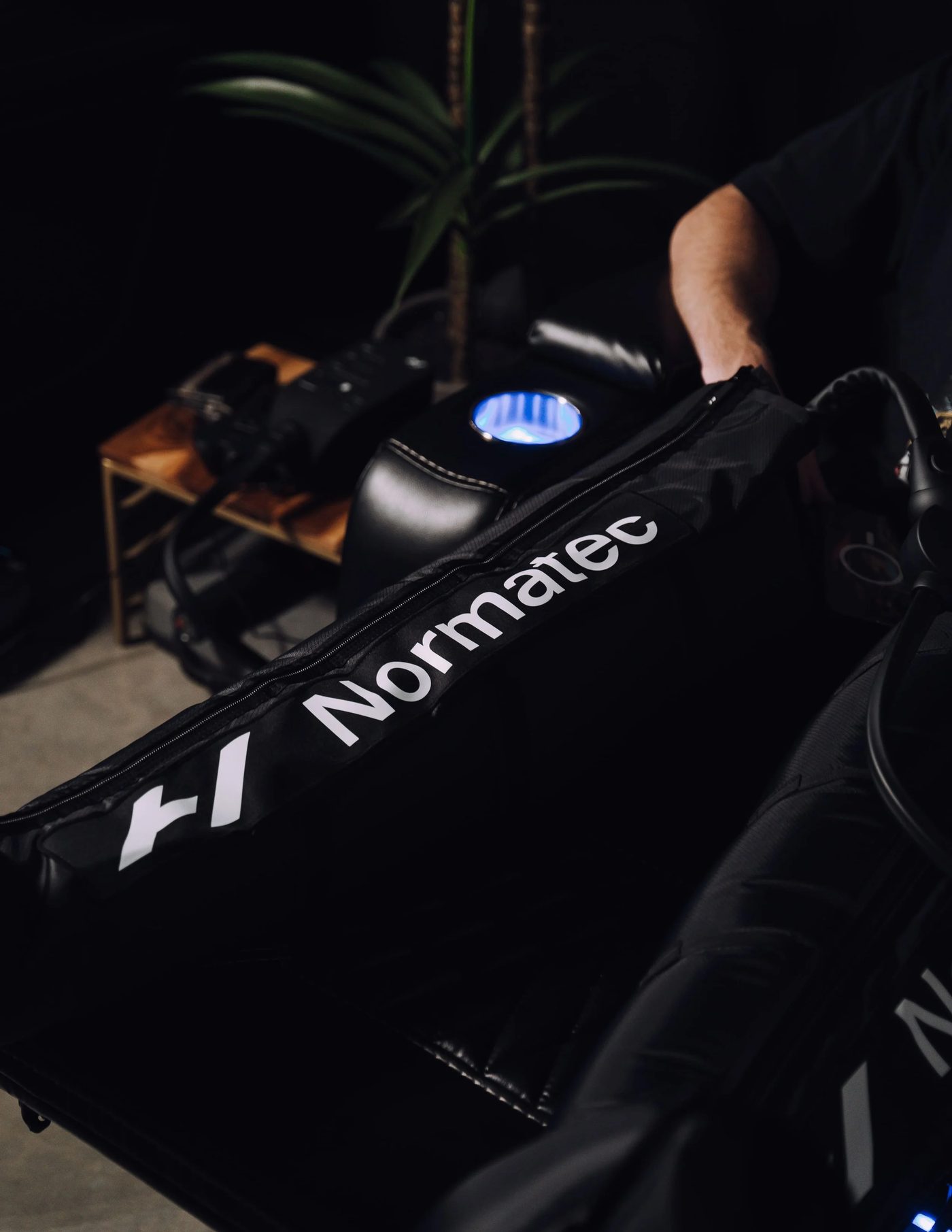
Compression therapy uses inflatable Normatec sleeves that squeeze and release in waves, from your feet up. It pushes fluid out of tired limbs the way a long massage would, while you sit back in a recliner and do nothing at all.
- Legs, arms & hips
Your first visit
What to expect
Arrive a few minutes early. We walk you through everything, every time.
- 1
Settle into a recliner. Choose legs, arms or hips.
- 2
We zip you into the sleeves and set the pressure to your comfort.
- 3
Thirty minutes of rhythmic squeezing, foot to hip. Most people close their eyes.
- 4
Stand up lighter. Add BrainTap to the same session.
Why people book it
What compression therapy is good for
Flushes heavy legs
Moves fluid and waste out of the limbs after running, games or a double shift.
Less swelling
Rhythmic pressure helps the lymph system do its job.
Fresh before an event
A pre-game favorite for local athletes.
Zero effort
Sit, relax, done.
Book it when
- Heavy legs after running or standing all day
- Swelling and circulation
- Lymphatic drainage
- Pre-event freshness
Check first
Check with your doctor first if you have a blood clot, DVT history or an open wound on the limb.

Read before you book
Compression Therapy questions, answered
- How it works4 min
What is compression therapy, and what does it feel like?
Compression therapy is 30 minutes in air-filled sleeves (ours are Normatec) that inflate from your feet up in slow waves, then release. It feels like a firm, rhythmic massage. People use it for heavy legs, swelling, soreness after training and long days on their feet.
Read the answer - Cold plunge4 min
Who should check with a doctor before a cold plunge?
Ask your doctor first if you are pregnant, have a heart condition or uncontrolled high blood pressure, have Raynaud's, are recovering from surgery, or have a seizure disorder. Healthy adults can plunge safely with a coach. When in doubt, ask; a two-minute phone call is cheaper than a bad day.
Read the answer - Soreness and injuries4 min
Heat or ice for sore muscles? A simple rule
Cold for anything new, hot and swollen (the first 48 hours after a tweak or sprain). Heat for stiffness, tightness and old aches without swelling. For normal post-workout soreness, either works: cold if you want less soreness tomorrow, heat if you want to feel loose tonight, or both with contrast therapy.
Read the answer
Book it
Ready when you are
Current prices and times live in the scheduler. Want a better per-session rate? Core Service Packs work across every core service.
Good to know
Compression Therapy questions
Ready to try it?
Walk-ins welcome when there is space. Booking takes a minute.