
- How it works
- 4 min read
- Updated Oct 8, 2026
What is compression therapy, and what does it feel like?
Short answer
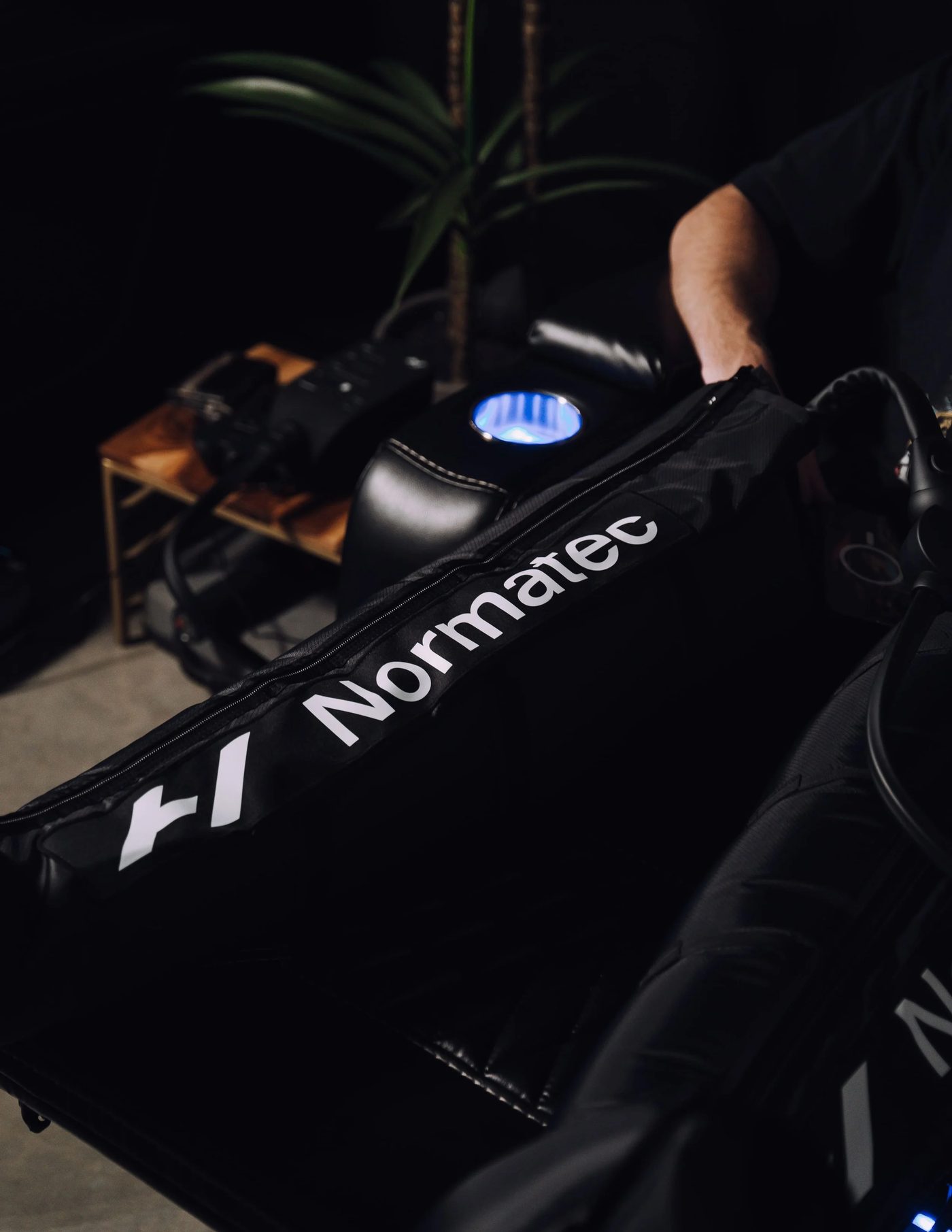
Compression therapy is 30 minutes in air-filled sleeves (ours are Normatec) that inflate from your feet up in slow waves, then release. It feels like a firm, rhythmic massage. People use it for heavy legs, swelling, soreness after training and long days on their feet.
How it works
Your legs rely on muscle movement to push fluid back toward the heart. After a hard run, a long shift or a flight, that fluid pools and the legs feel heavy. Pneumatic compression does the pushing for you: chambers inflate in sequence from the foot upward, moving fluid along, then release and repeat.
The brand we use, Normatec, is the one you see in pro locker rooms. The idea behind it is simple: better fluid movement means less swelling and less of that dull ache.
What it feels like
You sit back in a recliner, zip into the sleeves, and the first chamber at your foot inflates. It is a firm hug, not a crush. The wave travels up to your hips, holds a moment, and lets go. Then again. By the fifth cycle most people have closed their eyes.
- Pressure levels are adjustable. Start in the middle.
- Legs are the most popular. Hips and arms are available too.
- You can read, nap or add a BrainTap session on top.
Who books it
- Runners and athletes the day after a hard session, or the day before a game
- Nurses, teachers, retail and warehouse staff after long shifts on concrete
- Anyone with mild leg swelling or tired, achy calves
- Travelers after a long flight or drive
- Lifters on a rest day who want to feel fresh without heat or cold
How often
Once or twice a week is plenty for maintenance. During a heavy training block or a stretch of long shifts, every other day is fine. Thirty minutes is a full session; longer does not add much.
Who should skip it
- A current or suspected blood clot (DVT)
- Severe peripheral artery disease
- An open wound, skin infection or fresh fracture on the limb
- Congestive heart failure or pulmonary edema
- Pregnancy: ask your doctor first
At Revive
If you are not sure, text us before you book. We will tell you honestly if it is not the right fit.
Pairs well with
Cold plunge before it (calm the inflammation, then flush), or BrainTap during it (the sleeves relax the body while the headset relaxes the mind). Compression and BrainTap can be booked together, or covered with sessions from a Core Service Pack.
Not medical advice. If you are injured, pregnant or have a health condition, check with your doctor first.
Put it to use
Book it at Revive
Compression Therapy
Normatec sleeves squeeze and release in waves while you sit back in a comfy chair. Think of it as a massage that flushes heavy, tired limbs.
Learn more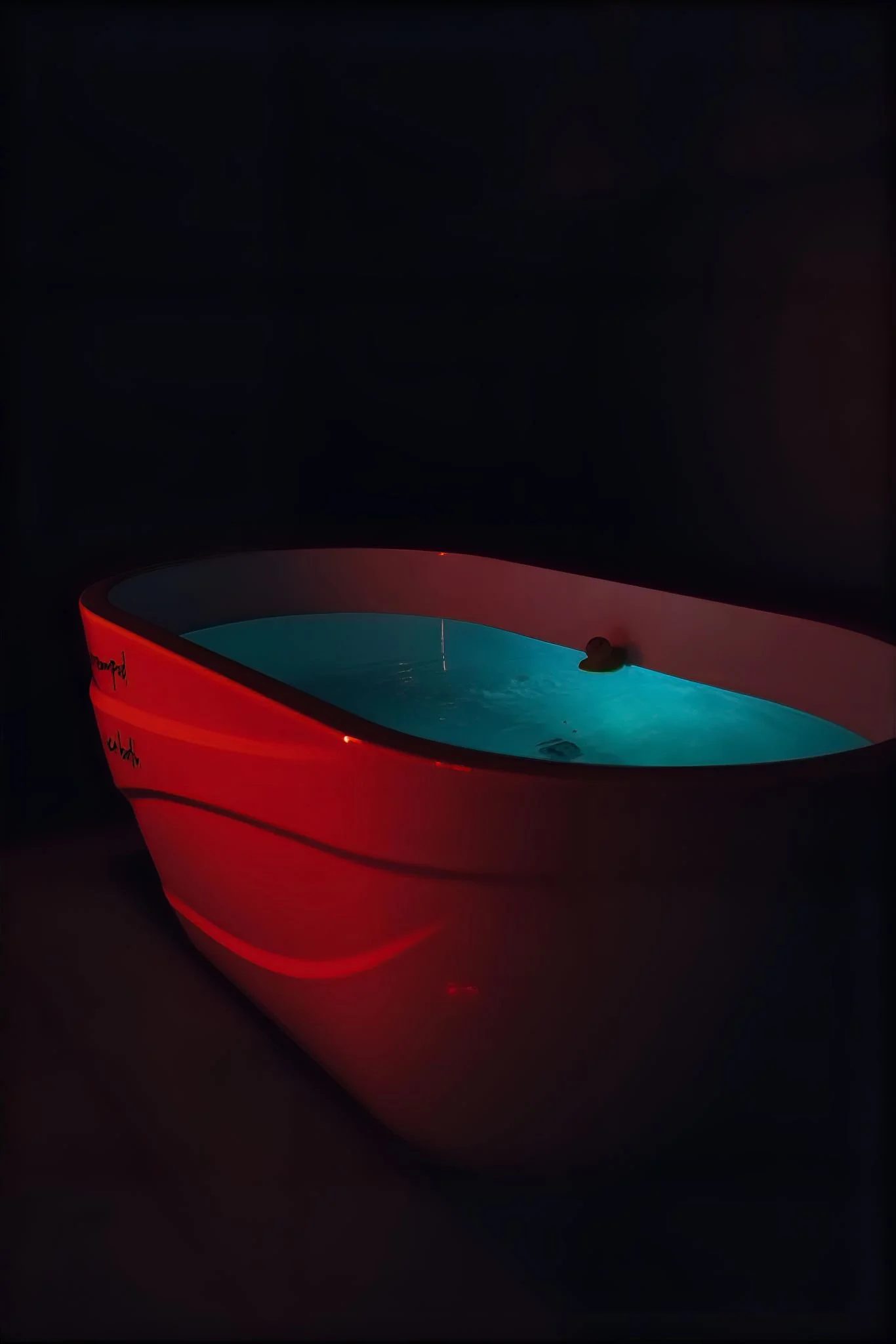
Cold Plunge
A dip in brisk 41°F water, at your pace. Go coached or solo. Either way, a team member is right there if you want a hand with your breathing.
Learn more
BrainTap
A light-and-sound headset session that walks your brain into a calm, focused state. Add it to compression or PEMF.
Learn more
Good to know
Related questions
Keep reading
Related guides
- Soreness and injuries4 min
Heat or ice for sore muscles? A simple rule
Cold for anything new, hot and swollen (the first 48 hours after a tweak or sprain). Heat for stiffness, tightness and old aches without swelling. For normal post-workout soreness, either works: cold if you want less soreness tomorrow, heat if you want to feel loose tonight, or both with contrast therapy.
Read the answer - Soreness and injuries5 min
Pulled hamstring: what actually helps in the first week
Days one and two: rest it, cool it and compress it. Days three to seven: gentle, pain-free movement, light heat before moving, and keep the compression going. Massage and stretching come after the first week. If you felt a pop, cannot walk normally, or see heavy bruising, have a doctor look at it first.
Read the answer - How it works4 min
What is PEMF therapy, in plain English
PEMF stands for pulsed electromagnetic field. You lie on a mat that pulses low-frequency magnetic fields through your body for 20 minutes. You do not feel the pulses; you feel warmth and deep relaxation. People use it for chronic aches, stiffness, stress and sleep. Skip it if you have a pacemaker or are pregnant.
Read the answer
Still have a question?
Text us. A real person answers, and we will tell you honestly what to book.