- Infrared sauna
- 4 min read
- Updated Oct 8, 2026
Infrared sauna vs traditional sauna: which should you book?
Short answer
A traditional sauna heats the air to 170 to 200°F and you absorb heat from it. An infrared sauna uses light to warm your body directly at a gentler 120 to 150°F, so you can stay longer and sweat just as much. Both are good for you; infrared is easier for most people to actually enjoy for 30 minutes.
How each one heats you
A traditional (Finnish-style) sauna heats rocks, the rocks heat the air, and the air heats you. Pour water on the rocks and you get a wave of steam. The room is 170 to 200°F and most people last 10 to 15 minutes.
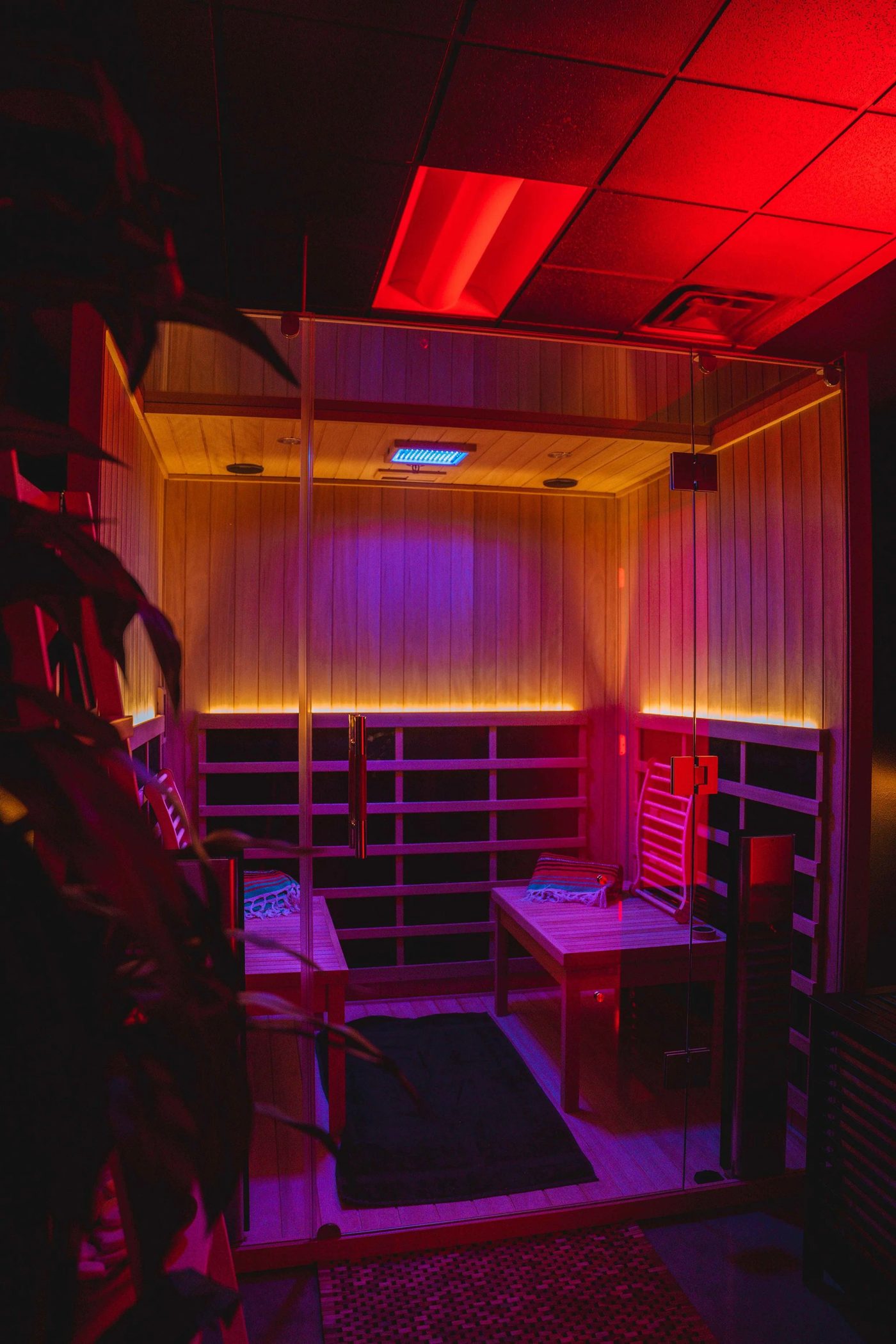
An infrared sauna skips the air. Panels emit infrared light that your body absorbs directly, so you feel deep warmth while the air stays around 120 to 150°F. Sessions run 25 to 40 minutes because you are not fighting to breathe.
Which sweats more?
Per minute, a traditional sauna. Per session, it evens out, because you stay in the infrared cabin two or three times longer. Both deliver a real, dripping sweat.
Which is better for
- Sore, tight muscles: infrared. The heat reaches deeper and you can stay long enough to loosen up.
- A quick blast and a steam ritual: traditional.
- Stress and sleep: infrared. Thirty quiet minutes in warm light calms a busy mind.
- Skin and glow: both. Infrared's longer, gentler sessions tend to feel better on the face.
- Pairing with a cold plunge: either. Infrared leaves you warm to the core, which makes the plunge easier to enter.
- If heat makes you dizzy: infrared, and start with 15 minutes.
What about chromotherapy?
Our infrared cabins have color-light therapy built in: red, blue, green and more. The research on color alone is thin; what people consistently report is that choosing a color makes the session feel more intentional and relaxing. Pick one, or ask us for a suggestion.
Which should you book?
For recovery, relaxation and a session you will actually finish, infrared. If you grew up with traditional saunas and love the steam, you may miss it. Most first-timers find infrared the easier habit to keep.
At Revive
Revive's saunas are private infrared cabins with chromotherapy, bookable on their own or as a combo with a coached cold plunge.
Not medical advice. If you are injured, pregnant or have a health condition, check with your doctor first.
Put it to use
Book it at Revive
Infrared Sauna
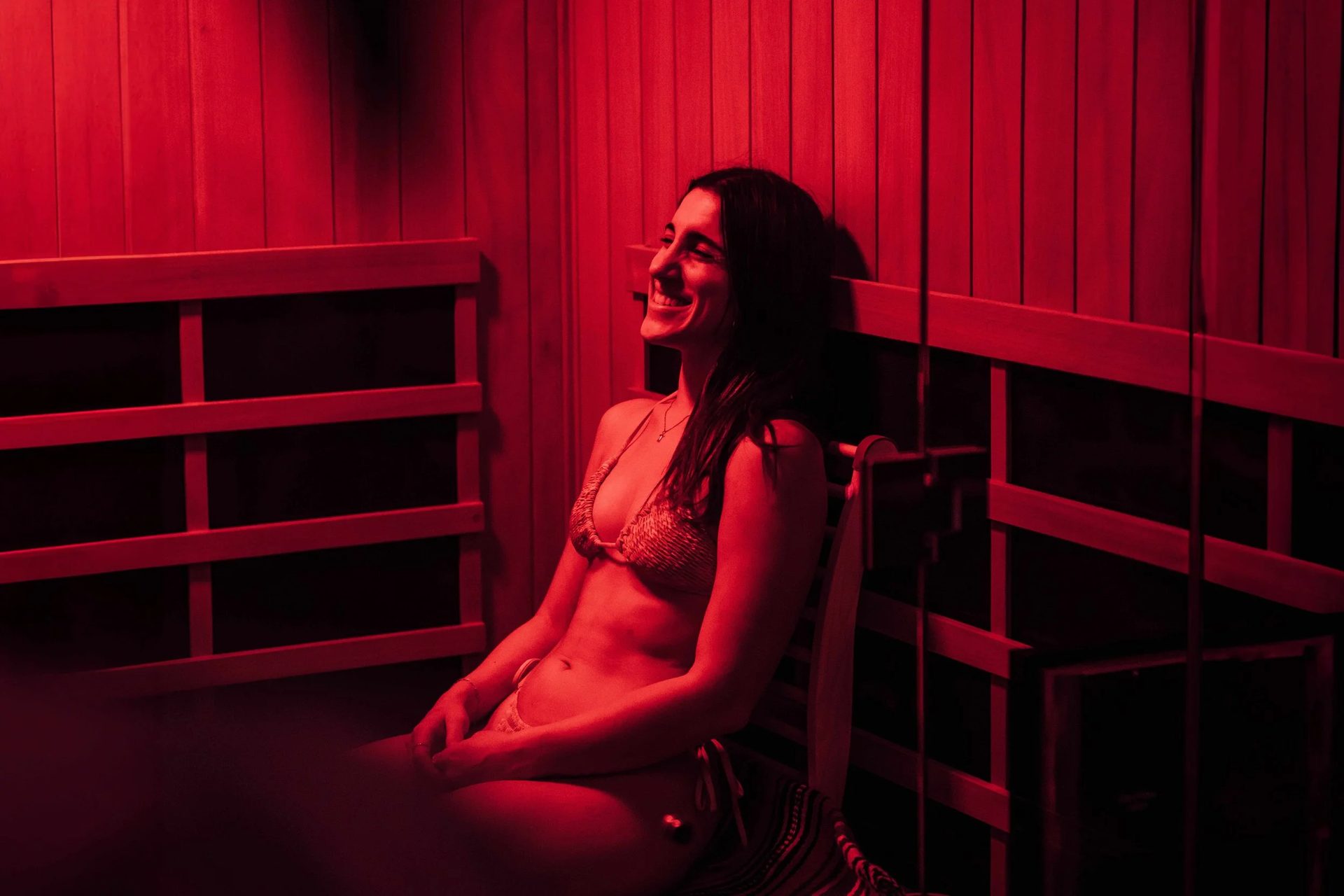
A clean, private sauna of deep, gentle heat with color-light therapy. Easier to breathe than a traditional sauna.
Learn more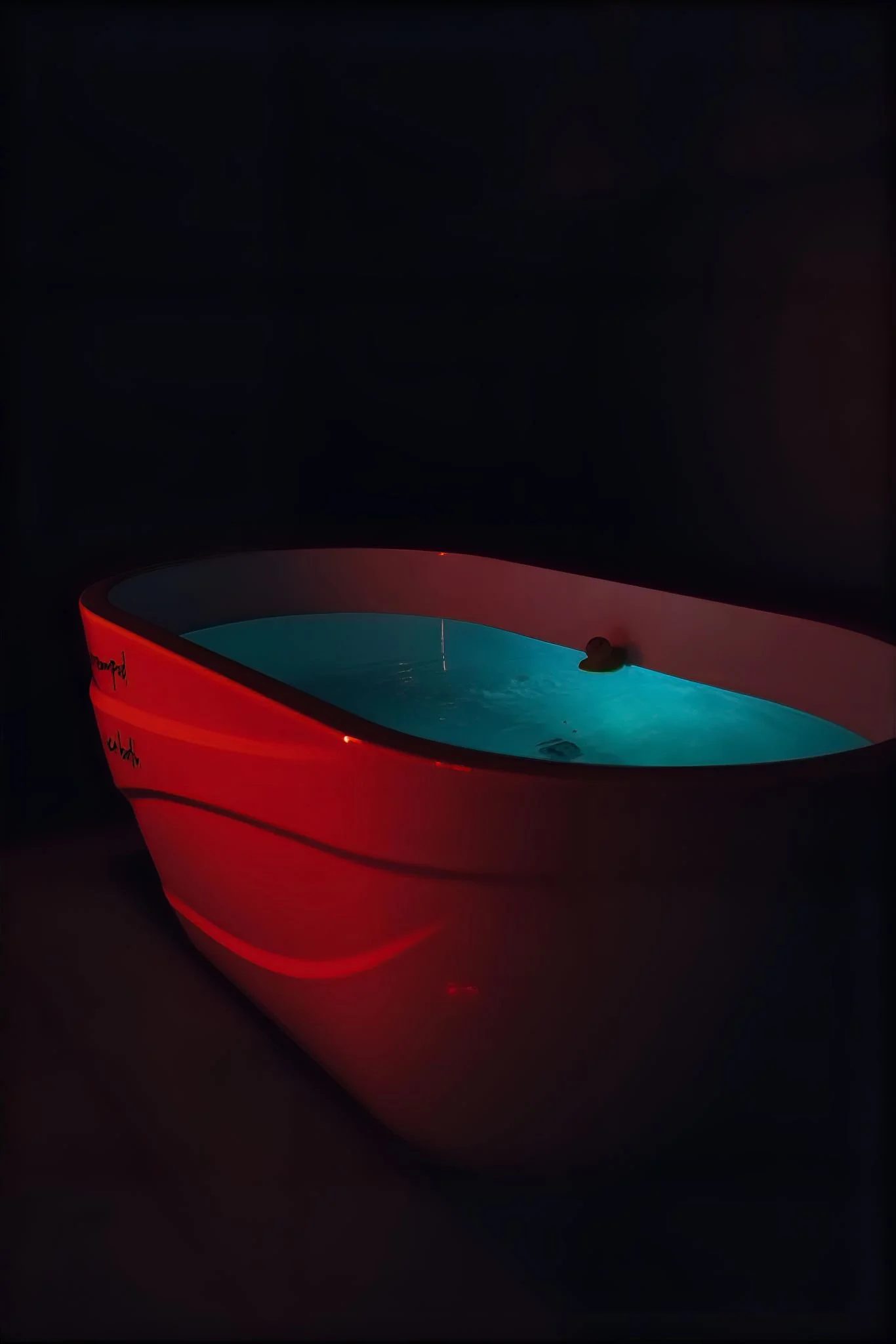
Sauna + Cold Plunge
Thirty minutes of infrared heat, a quick shower, then a coached plunge in 41°F water. The most popular combo at Revive, and simpler than booking both.
Learn more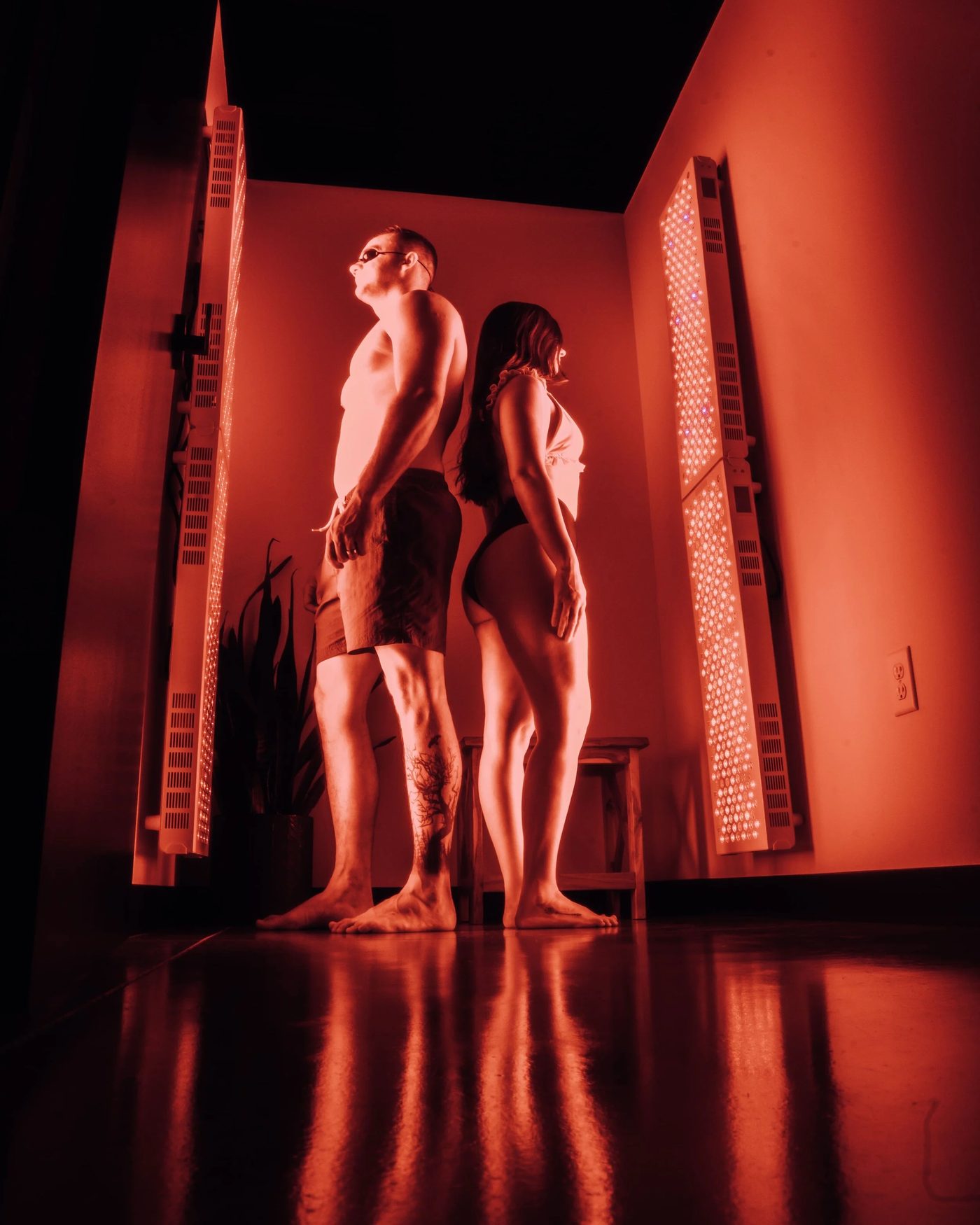
Red Light Therapy
Twenty minutes in front of a red and near-infrared panel. No heat, no UV, just the wavelengths your cells use to repair.
Learn more
Good to know
Related questions
Keep reading
Related guides
- Infrared sauna4 min
Your first infrared sauna: how long, what to wear, what to do after
Plan on 20 to 30 minutes, wear a swimsuit, shorts or just a towel, and drink a big glass of water before and after. Afterward, cool down slowly, rinse, and rehydrate. Booked the cold plunge too? Rinse off first, then head to the tub.
Read the answer - Cold plunge4 min
Sauna first or cold plunge first?
Sauna first, then a quick shower, then the cold plunge. Heat warms the muscles and makes the cold easier to enter, and finishing cold leaves you alert and clear for hours. At Revive it is always this order, in one pass: our infrared saunas stay completely dry inside, so nobody goes back in after plunging.
Read the answer - Cold plunge4 min
What is contrast therapy?
Contrast therapy is heat followed by cold on purpose, most often an infrared sauna and then a cold plunge. Heat widens blood vessels, cold narrows them, and the switch acts like a pump for circulation. People use it for soreness, stiffness, energy and a clear head.
Read the answer
Still have a question?
Text us. A real person answers, and we will tell you honestly what to book.